


Why Your Indoor Cat Needs Vertical Space — And How to Set It Up Without Overthinking It
Why Your Indoor Cat Needs Vertical Space — And How to Set It Up Without Overthinking It
If you've ever watched your cat stare out the window for hours, knock things off tables just to see what happens, or sprint through the hallway at full speed at two in the morning, you've probably asked yourself: is my cat bored?
The answer is often yes. And the fix might be simpler than you think. Indoor cats don't need a backyard or a complicated setup. What they do need is a space that lets them climb, scratch, hide, and settle into a good nap on their own terms. A lot of that comes down to one thing most pet owners overlook — vertical space.
What Indoor Cats Actually Need to Stay Happy
Cats didn't evolve to live on flat surfaces. In the wild, they climb trees, hunt from elevated positions, and seek out enclosed spaces when they want to feel safe. When you bring a cat indoors, those instincts don't disappear. They just need an outlet.
Here's what cat behavior research generally points to:
- Climbing and elevated resting spots give cats a sense of security and a better view of their surroundings.
- Appropriate scratching surfaces let cats stretch, mark territory, and maintain their claws — instead of targeting your sofa.
- Enclosed hideaways provide a private retreat when your cat needs quiet time or feels overwhelmed.
- Multiple activity zones encourage movement, play, and exploration throughout the day.
The good news is that you don't need a dedicated cat room or an expensive custom build. A single well-designed piece of furniture can cover most of these needs.
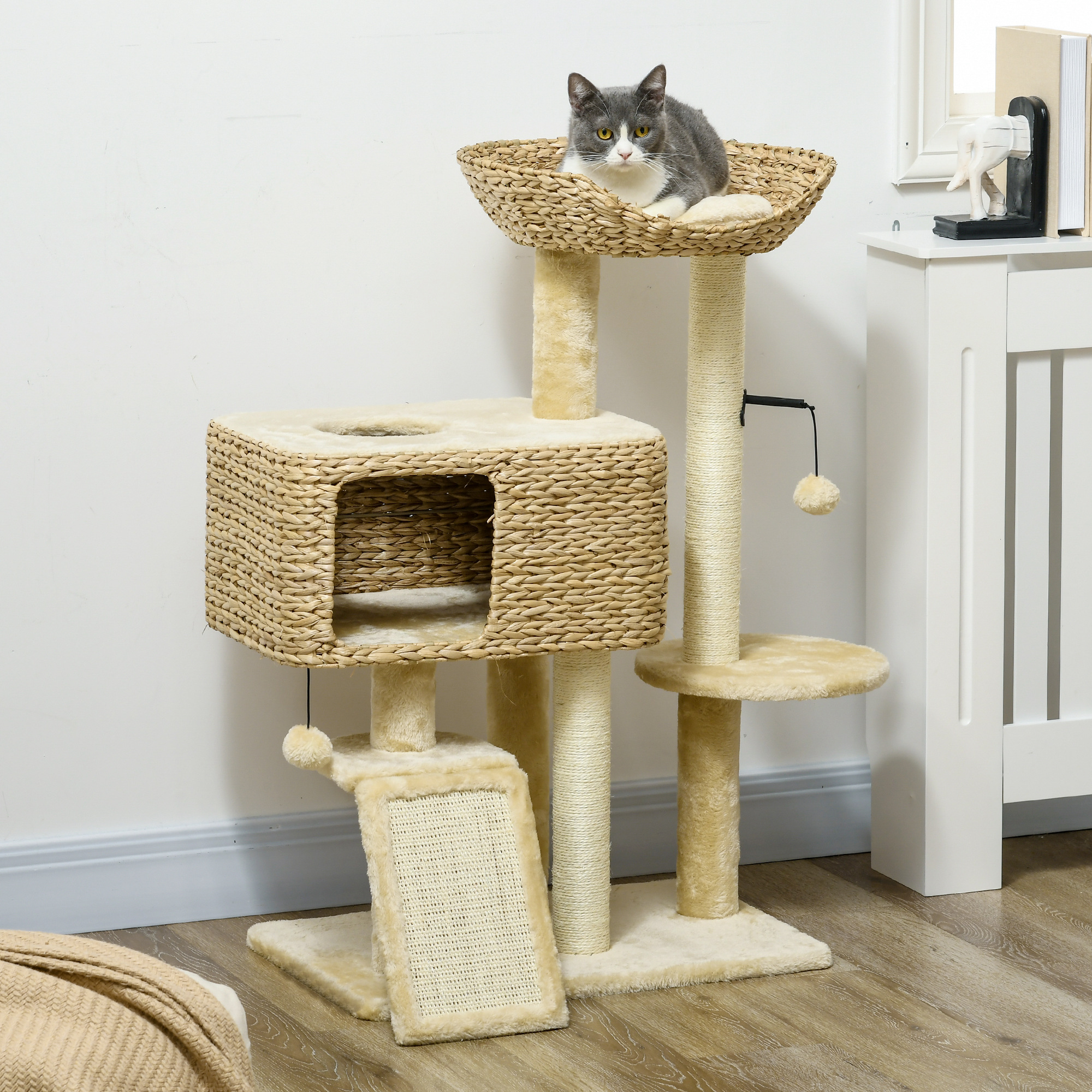
Five Simple Ways to Enrich Your Cat's Indoor Environment
If you want to give your indoor cat a more stimulating space, here are a few practical starting points — none of them require major changes to your home:
- Give your cat a high place to rest. Cats naturally prefer elevated spots. A cat tree, a wall shelf, or even a cleared-off bookcase can work. The goal is to give them a vantage point where they feel safe and can observe the room.
- Put scratching options where your cat already spends time. If your cat likes scratching the corner of the sofa, place a scratching post or ramp nearby. Redirecting is more effective than punishing.
- Provide at least one enclosed hiding spot. This could be a cardboard box, a covered cat bed, or an enclosed condo on a cat tree. Some cats love hiding under furniture; others prefer a cozy den up high.
- Add a few small play elements. A dangling toy, a treat puzzle, or even a crumpled paper ball can give your cat something to investigate. Rotate toys every few days so they don't lose their appeal.
- Keep litter and resting areas separate. Cats prefer their eating and sleeping spaces to be away from the litter box. It sounds obvious, but it matters more than most people realize.
None of these changes need to be dramatic. The goal is to give your cat a few more options throughout the day. And one of the most efficient ways to do that is with a cat tree that covers the essentials.
What to Look for in a Cat Tree Your Cat Will Actually Use
There's no shortage of cat trees on the market. The challenge is finding one that works for both you and your cat. Here are the features that tend to matter most:
- Multiple levels and platforms. Cats like options. A tree with several platforms at different heights gives them room to climb, jump, and choose their favorite spot.
- Dedicated scratching surfaces. Look for sisal-covered posts or scratching ramps. Sisal holds up well and gives cats a satisfying texture to scratch.
- An enclosed hiding spot. Not all cat trees include this. But an enclosed condo gives shy or nervous cats a place to retreat when they need privacy.
- A comfortable resting area. A soft, padded platform makes the tree more inviting, especially for cats that love to curl up and nap in warm spots.
- A stable base. A wobbly tree is a dealbreaker. If it tips when your cat jumps on it, they won't use it again. Look for wide bases and solid construction.
- A style that fits your home. If a cat tree clashes with your living room, you'll be tempted to move it to a corner where your cat never goes. Neutral colors and natural materials tend to blend more easily with existing décor.
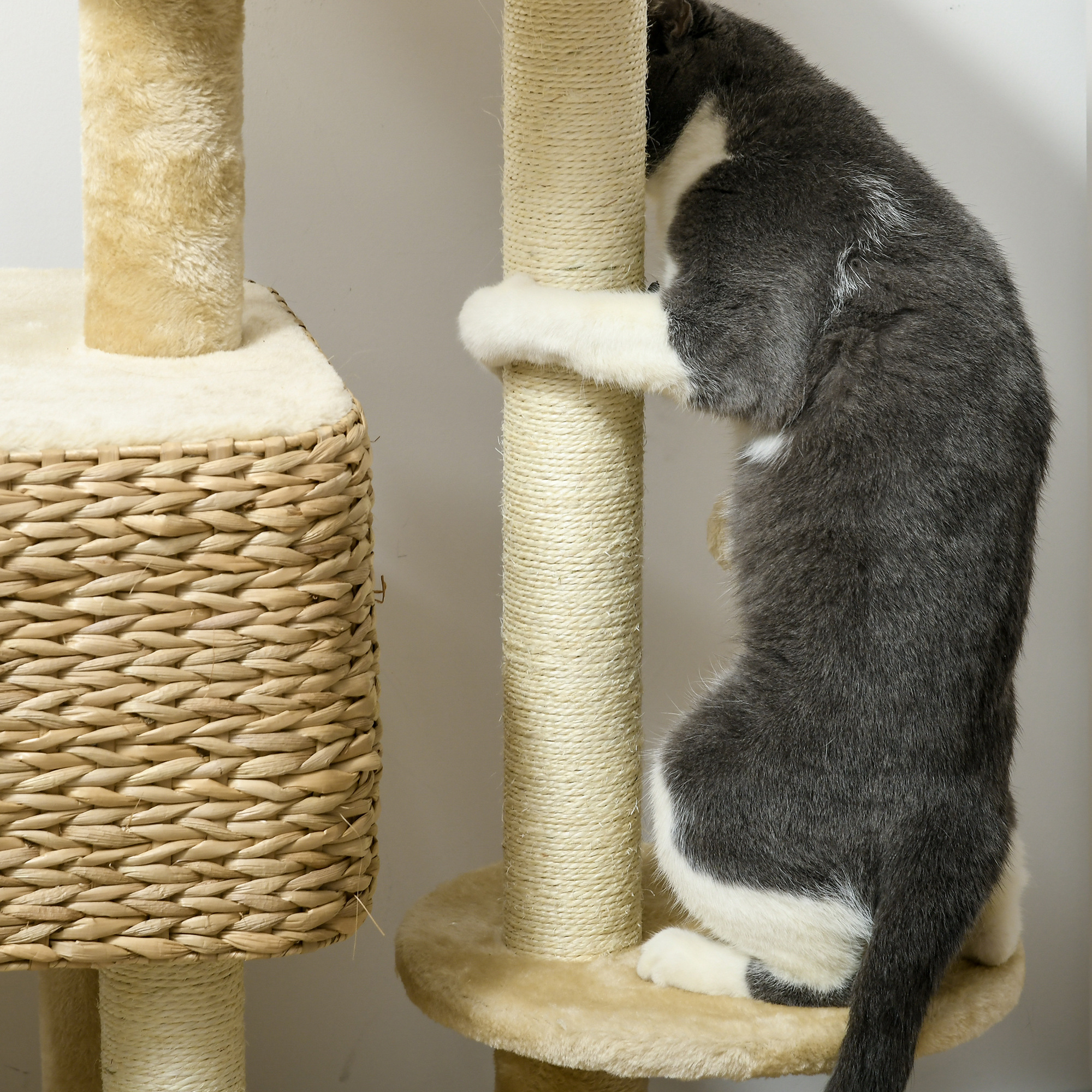
A Cat Tree That Covers the Basics Without Sacrificing Your Home's Look
If you're looking for a cat tree that brings most of these features together, PAWIFYCO's water hyacinth cat tree with scratching posts and condo is worth a closer look.
It combines multiple climbing platforms, a private woven water hyacinth condo, a plush raised bed, sisal-wrapped scratching posts, and an angled scratching ramp — all in a warm brown and beige color scheme that works naturally in most living rooms and bedrooms.
A few details from the product specs that stand out:
- The overall dimensions are 23.5" W × 15.75" D × 38.5" H — a solid vertical presence without dominating a small apartment living room.
- The enclosed condo measures 18" W × 13.25" D × 9.75" H with a 7.75" × 7.75" entrance, giving cats a genuine private hideaway.
- The total weight capacity is 44 lbs, with each platform rated for up to 22 lbs.
- The wide base and an included anti-tip wall attachment help keep the tree stable during active climbing and play.
- Sisal-covered posts and the angled scratching ramp give cats two different surfaces for stretching and scratching.
- A dangling toy ball adds a simple play element that can help keep cats engaged.
The woven water hyacinth details give the condo and structure a natural, furniture-inspired look. It sits more comfortably in a styled living space than many brightly colored or heavily carpeted cat trees you'll find online.
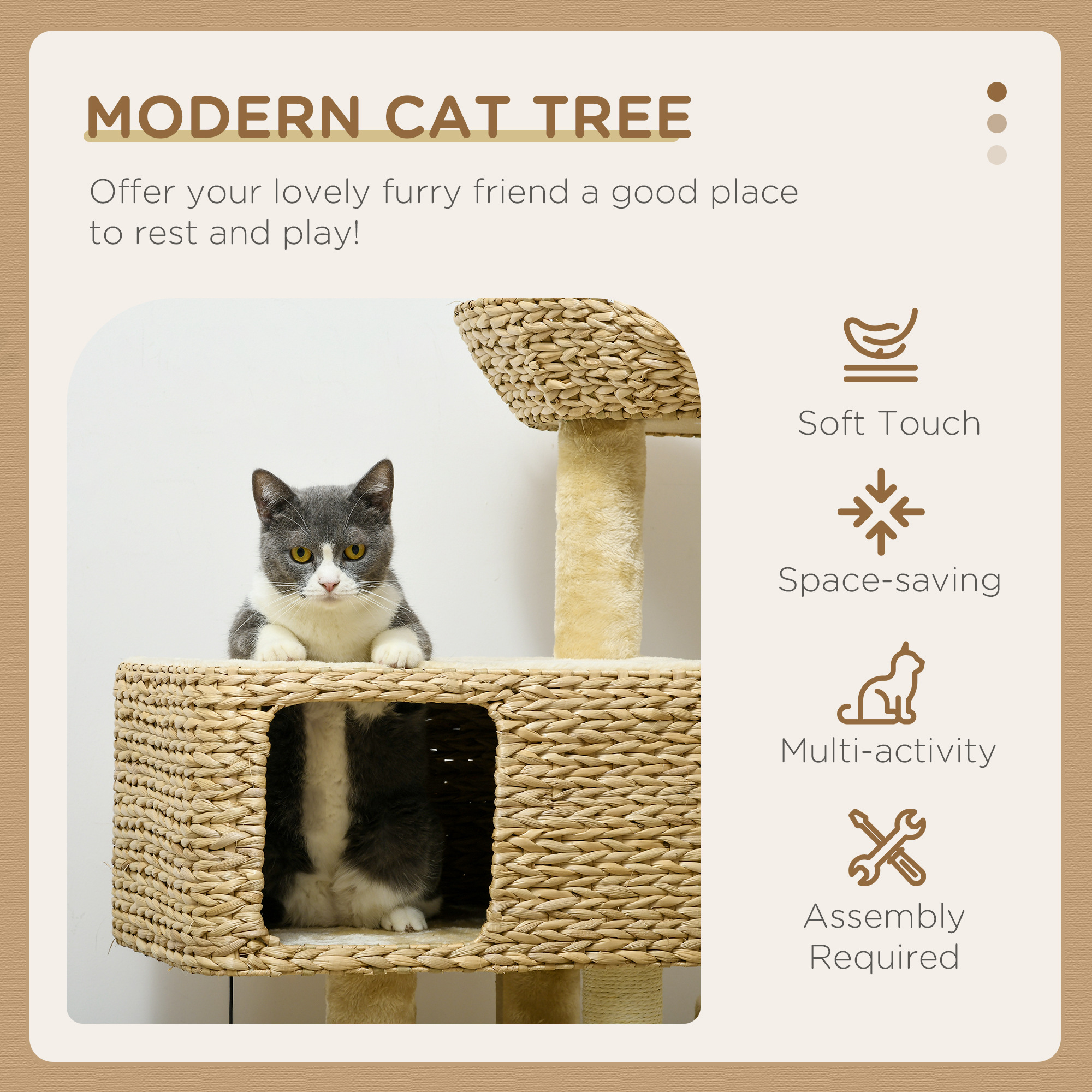
Start Small, and Pay Attention to What Your Cat Prefers
Enriching your indoor cat's environment doesn't have to be a big project. Start with the basics: give them a high place to rest, something good to scratch, and a cozy spot to hide. Watch what they gravitate toward, and adjust from there.
Some cats will claim the top platform within minutes. Others will spend their first few days just sniffing the condo before they decide it's theirs. And some will spend all their time on the scratching ramp. That's all perfectly normal.
The point is to give them options — and a well-designed cat tree can cover a surprising number of those options in a single piece. Your cat doesn't need a mansion. They just need a place that feels like it's theirs.


